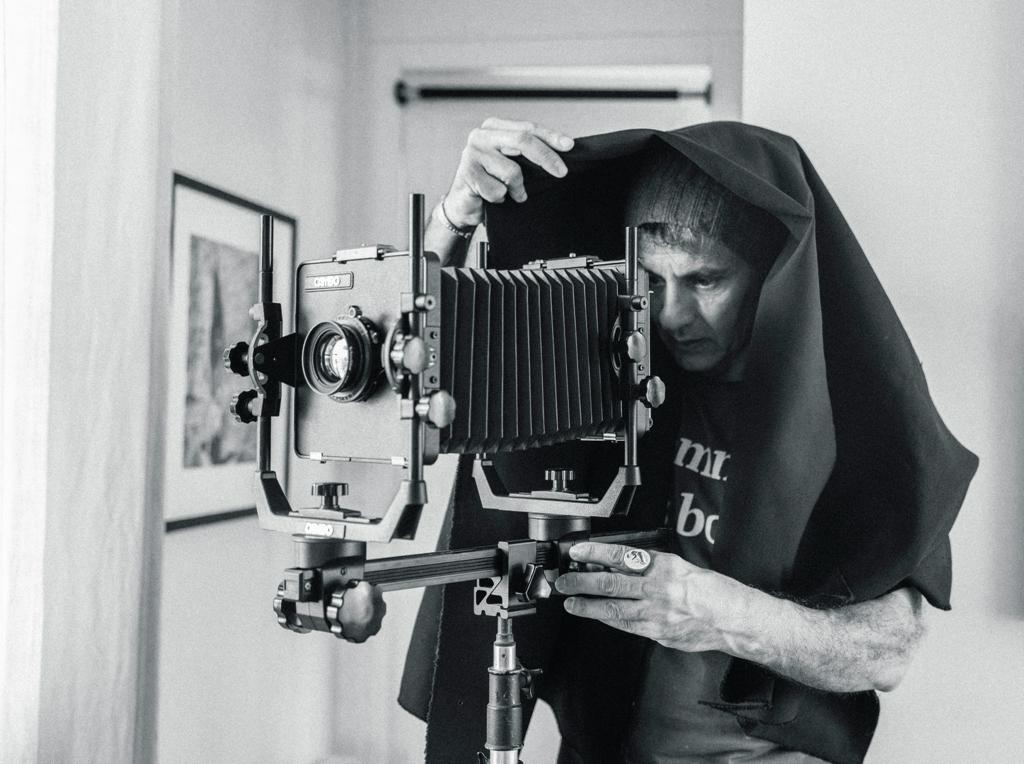
Bawayah grew up in poverty, in a family of nine children and an illiterate mother, on the dusty fringe of the region’s populace. Surviving variously as a goat-herder, fruit-picker, street peddler, and construction worker, Bawayah became fascinated by the cameras of tourists visiting Jerusalem. On an impulse, he talked his way into a scholarship at a local photography school. He decided early on that he wanted to shoot pictures that celebrated his world and that of other marginalized peoples. His work would be grounded in his belief that, despite the grimness of his youth, “humanity is beautiful.”
Bawayah shot his first series, “Childhood Memories,” while still at school. He returned to his village and pointed his camera at everything that elicited early experience, constructing a vivid record of his life that proved precocious and inspired enough to win him attention and a permanent path of esteem. He has focused since on the sequestered lives of gypsies, patients in an asylum, Palestinian workers temping in Israel, and children in an orphanage. In each case, he spends time with his often-shunned or exploited subjects, wins their trust, and finally reveals them as “the same as you and me.”
Bawayah’s beautifully probing images balance the aestheticism of masterly compositions with the harsh realities he targets in his various series. They present his subjects not as victims or tragic figures, but as possessing dignity and deserving of compassion. In Hollywood parlance, they become “relatable,” and often for the first time to those who only “know” them by news accounts. It might be said that in its quiet way, respectful and empathetic work like Bawayah’s is more effective in inching that bloody patch of the world toward peace than any military action ever will.